
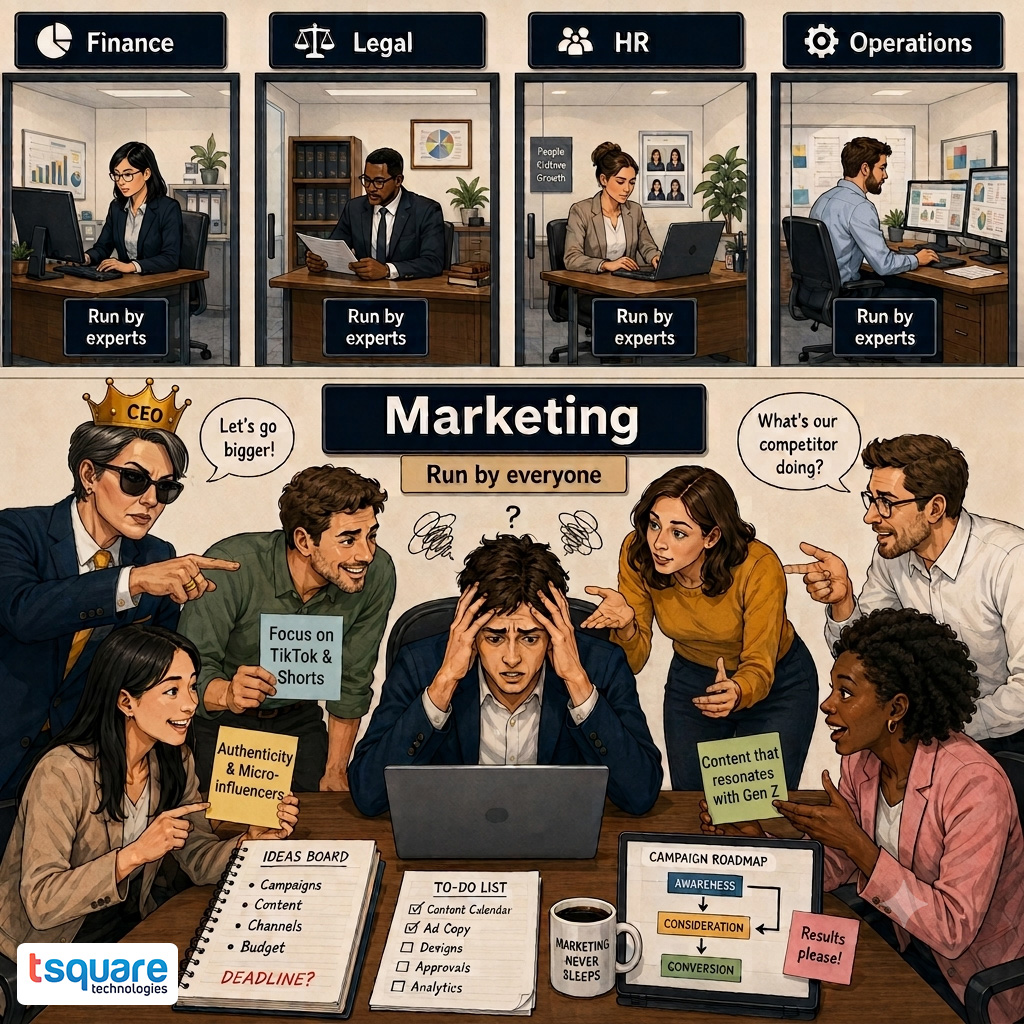
In many organizations, departments such as Finance, Legal, HR, and Operations have clearly defined responsibilities and specialized expertise. Marketing, however, increasingly depends on the involvement of the entire organization.
Customers interact with a business through multiple touchpoints. They experience the brand through a sales conversation, customer support interaction, product experience, website, social media, employee communication, and even the way a company responds to a problem. Every one of these interactions can influence how customers perceive the brand.
That is why marketing has become a company-wide responsibility.
Marketing Goes Beyond the Marketing Department
The marketing team may develop the strategy, campaigns, content, and messaging, but they cannot create an authentic brand experience alone. Every department contributes to how customers experience and perceive the business.
Different teams bring valuable perspectives to the marketing process:
- Sales teams understand customer objections and purchasing behavior.
- Customer support knows what customers struggle with and what they value.
- Product and operations teams understand how the service or product actually works.
- HR influences company culture and employee advocacy.
- Leadership provides the vision, direction, and overall business strategy.
Every Customer Interaction Matters
A company’s marketing does not stop when a customer leaves a website or sees an advertisement. Every interaction can strengthen or weaken the brand.
A helpful support conversation, a smooth product experience, a knowledgeable sales representative, or a thoughtful response to a customer problem can build trust. On the other hand, poor communication or inconsistent service can damage the reputation that marketing campaigns worked hard to establish.
This means that every employee can influence brand perception, whether or not their job title includes the word “marketing.”
Modern Marketing Requires Everyone’s Input
Marketing is also changing rapidly. Customers increasingly respond to authentic content, short-form videos, real experiences, micro-influencers, and relevant communication rather than content that feels overly promotional.
Creating this type of content requires more than a marketing team working in isolation. Employees across the organization have firsthand knowledge, customer insights, experiences, and stories that can make marketing more authentic and relatable.
For example, employees can contribute:
- Customer success stories
- Real-world product experiences
- Frequently asked customer questions
- Industry insights and expertise
- Behind-the-scenes experiences
- Ideas for useful educational content
Employees Help Create Authentic Brand Experiences
Customers increasingly want to understand the people and values behind a business. Employee-generated content, expert insights, customer interactions, and real experiences can make a brand feel more human.
This does not mean everyone needs to become a marketer or create social media content every day. Instead, employees should understand that their work and interactions can influence customer trust, brand reputation, and business growth.
Marketing and Customer Experience Are Connected
Marketing can attract a customer, but the rest of the organization plays a major role in determining whether that customer stays.
A successful customer journey may involve:
- Marketing creating awareness
- Sales building interest and confidence
- Operations delivering the promised experience
- Customer support solving problems
- Product teams improving the customer experience
- Employees reinforcing the company’s values
When these experiences are consistent, customers are more likely to trust the brand, return in the future, and recommend it to others.
Building a Company-Wide Marketing Culture
Organizations can strengthen their marketing efforts by creating a culture where employees understand the connection between their work and customer perception.
This can be achieved by:
- Sharing customer feedback across departments
- Encouraging employees to contribute content ideas
- Connecting marketing goals with customer experience
- Celebrating successful customer stories
- Encouraging collaboration between marketing and other departments
- Helping employees understand the company’s brand values
When employees understand the bigger picture, marketing becomes more consistent and authentic across every customer touchpoint.
Marketing Is a Shared Business Responsibility
The most successful organizations do not view marketing as a department that simply creates advertisements, social media posts, or campaigns. Instead, they recognize that every employee contributes to the customer experience.
The marketing team creates the strategy and provides direction, but the entire organization helps bring that strategy to life through everyday actions and customer interactions.
Final Thoughts
Marketing is no longer limited to campaigns, advertisements, and promotional content. It is reflected in every interaction a customer has with a business.
When sales, customer support, product, operations, HR, leadership, and marketing work together, organizations can create stronger customer experiences, build greater trust, and develop a more authentic brand.
Marketing creates the strategy.
Employees create the experience.
Customers create the reputation.